

"ONOE: Can Simultaneous Elections Enhance India's Democratic Process?
WHY IN NEWS
Recently, The Union Cabinet has approved former President Ram Nath Kovind-led committee’s report on the “one nation, one election" (ONOE).
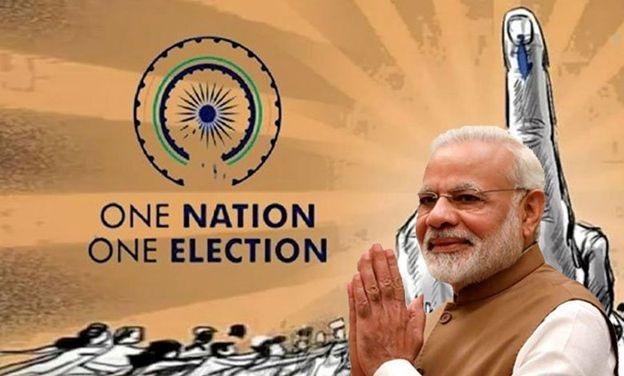
WHAT IS "ONE NATION, ONE ELECTION" (ONOE)
- One Nation, One Election (ONOE) is a proposal in India to conduct elections for both the Lok Sabha (national parliament) and all state assemblies at the same time (simultaneously).
- This idea aims to save time and money, reduce the burden on the government, and ensure better governance by avoiding frequent elections.
HISTORY AND RECOMENDATIONS ABOUT "ONE NATION, ONE ELECTION" (ONOE)
- First four elections of India (1951-52, 1957, 1962, 1967) were simultaneously held for parliament as well as states assembly.
- In 1968-89, some state legislative assemblies were dissolved, this led to ONOE being discontinued completely.
- In 1983, the Election Commission, in its annual report, suggested reviving simultaneous polls.
- In 1999, a Law Commission report also recommended simultaneous election in India
- On 2 September 2023, Government of India constituted a high level committee to examin the issue of ONOE.
- The report of the committee was submitted on 14th March, 2024.
- On 18 September 2024, Modi Cabinet Approves 'One Nation, One Election' Bill.
ABOUT HIGH LEVEL COMMITTEE
- This committee has been constituted under the chairmanship of former President of India Ram Nath Kovind.
- Other members of the commitee:
- Amit Shah: Union Home Minister
- Arjun Ram Meghwal: Union Law Minister
- Adhir Ranjan Chowdhury: Parliamentary leader of the Indian National Congress (largest Opposition party) in Lok Sabha
- Ghulam Nabi Azad: Former Leader of Opposition in Rajya Sabha
- NK Singh: Chairman of the 15th Finance Commission
- Dr Subhash C Kashyap: Former Secretary General of Lok Sabha
- Harish Salve: Senior advocate of the Supreme Court
- Sanjay Kothari: Former Chief Vigilance Commissioner
ARGUMENTS IN FAVOUR OF "ONE NATION, ONE ELECTION" (ONOE)
- A parliamentary panel estimated that elections for the Lok Sabha and state assemblies cost over ₹4,500 crore. Conducting simultaneous elections would significantly reduce this financial burden.
- Currently, 5-6 state elections are held every year, keeping political parties and ministers in constant campaign mode. Simultaneous elections would allow leaders to focus more on governance and less on frequent campaigning.
- Elections often slow down district administration as the focus shifts to managing the election process. A unified election schedule would help maintain administrative efficiency by reducing disruptions.
- Paramilitary forces are regularly relocated from their original posts to provide election security. ONOE would minimize the need for frequent redeployment, improving the stability of security forces.
- Frequent elections disrupt routine governance and impact long-term policy implementation. By aligning national and state elections, ONOE would provide smoother governance with fewer interruptions.
- Frequent elections fuel divisive campaigns, worsened by social media, deepening societal divisions. ONOE would reduce such campaigns, promoting greater unity and social harmony.
ARGUMENTS AGAINST "ONE NATION, ONE ELECTION" (ONOE)
- India is a federal country with unique regional issues; simultaneous elections may lead to national issues overshadowing state-specific concerns.
- National political parties would gain an advantage over regional parties, weakening the federal spirit, which is a basic structure of the Constitution.
- Elections provide important feedback to governments, helping them adjust policies. If elections are held only once in five years, this valuable feedback will be delayed.
- ONOE would require constitutional amendments, as current provisions allow for the early dissolution of the Lok Sabha and state assemblies if the ruling party loses the majority.
- Articles 83, 85, 172, 174, and 356, which address the duration, dissolution, and President's rule, would need to be amended to implement fixed-term elections.
- Fixed-term elections may limit flexibility, preventing governments from seeking an early mandate or dissolving assemblies in case of instability.
One Nation, One Election" offers a chance to streamline elections, reduce costs, and improve governance. Though challenges exist, the potential benefits of enhanced efficiency, stability, and focus on long-term policies make it a promising step towards strengthening India's democracy.


