Context
India's space program has made remarkable strides, transitioning from vision-setting in 2024 to execution mode in 2025. Key missions like PSLV-C60 and developments in space technologies underline ISRO's ambitions for interplanetary missions, space station capabilities, and human spaceflight. These achievements reflect India's growing presence in the global space sector, supported by collaboration between ISRO, private firms, and academic institutions.
Important Points:
- PSLV-C60 Mission:
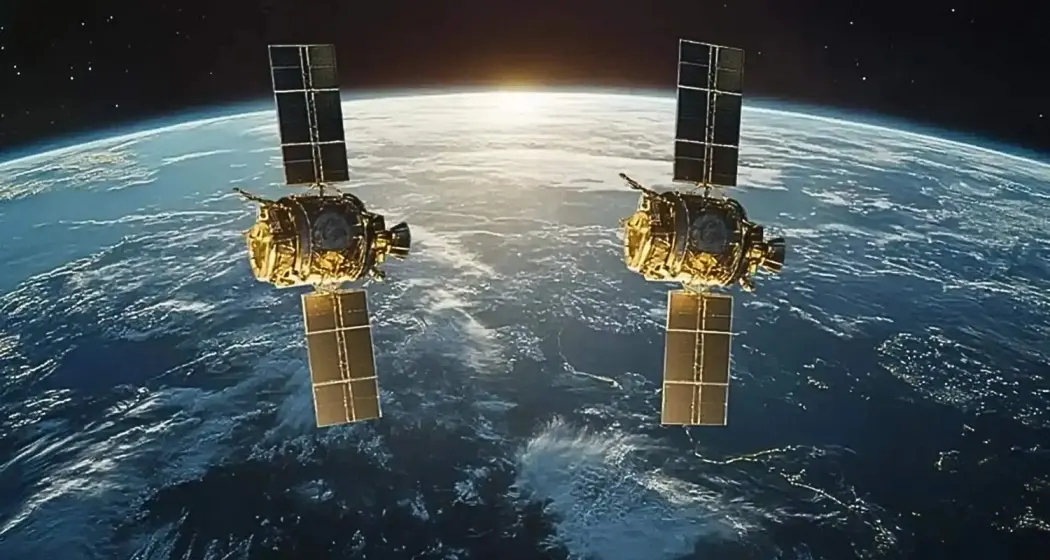
- Launched on December 30, 2024, carrying the Space Docking Experiment (SpaDeX) satellites.
- Marked India's first successful in-orbit docking on January 16, 2025, crucial for space station and lunar mission operations.
- Involved collaborations with private companies like Kepler Aerospace and Swiss-based s2a systems.
- POEM4 Orbital Testbed:
- Deployed after PSLV-C60's primary mission, carrying 24 payloads from ISRO, academia, and private companies.
- Key experiments included robotic manipulators, plant studies, innovative propulsion systems, and communication payloads.
- Private Sector Contributions:
- SpaceX's Transporter 12 mission carried payloads from three Indian companies: Pixxel Space, Digantara, and XDLINX Labs.
- Highlights included hyperspectral satellite constellations, space situational awareness technologies, and communication payloads.
- Infrastructure and Technological Advancements:
- Union Cabinet approved a third launch pad at Sriharikota to support human spaceflight and Next-Generation Launch Vehicle (NGLV) by 2029.
- Successful restart test of the Vikas engine for atmospheric operations at Mahendragiri.
- ISRO's New Leadership:
- V. Narayanan succeeded S. Somanath as ISRO Chairman on January 14, 2025, bringing expertise in cryogenic propulsion and Chandrayaan-2 reviews.
- Aditya-L1 Mission Data:
- Released its first batch of solar observation data, enriching global research on the Sun's effects on the solar system.
Key Terms Explained:
- SpaDeX (Space Docking Experiment): A project demonstrating in-orbit rendezvous and docking, essential for future space stations and lunar missions.
- PSLV Orbital Experimental Module (POEM4): A platform using the fourth stage of PSLV as an orbital testbed for various payloads.
- Hyperspectral Imaging: A technology that captures detailed spectral information for applications like agriculture, defense, and environmental monitoring.
- Vikas Engine: A liquid rocket engine developed by ISRO, critical for powering India's launch vehicles, including restart capability testing for atmospheric use.
- Aditya-L1 Mission: India’s first solar observation mission, studying the Sun and its effects on space weather.
MCQs (UPSC Level):
- Which of the following statements about India’s space achievements in 2025 is correct?
- The SpaDeX mission marked India's first attempt at in-orbit satellite docking.
- The PSLV Orbital Experimental Module (POEM4) phase tested green propulsion and robotic manipulations.
- India launched its first private satellite constellation using the NGLV.
- The Vikas engine restart test was conducted in space conditions.
- (a) 1 and 2 only
- (b) 2 and 3 only
- (c) 1, 2, and 4 only
- (d) 2, 3, and 4 only
Answer: (a) 1 and 2 only
- Consider the following technologies tested during the PSLV-C60 mission and POEM4 phase:
- Green propulsion systems
- Artificial intelligence-based orbital control
- Inter-satellite power transfer
- Synthetic Aperture Radar imaging
Which of the above are correctly matched to their demonstrated payloads?
- (a) 1, 2, and 3 only
- (b) 1, 3, and 4 only
- (c) 2 and 4 only
- (d) 1, 2, 3, and 4
Answer: (d) 1, 2, 3, and 4
- What is the significance of the third launch pad approved for construction at Sriharikota?
- Supports human spaceflight missions.
- Aims to accommodate increased launch frequencies.
- Ensures redundancy for existing launch pads.
- Exclusively dedicated to private satellite launches.
- (a) 1 and 2 only
- (b) 1, 2, and 3 only
- (c) 2 and 4 only
- (d) 1, 3, and 4 only
Answer: (b) 1, 2, and 3 only